 Livermore Sub-Zero Repair
Wine storage · 5 min read
Living in wine country: getting Sub-Zero wine storage right in Livermore
In a Livermore Valley home, the wine fridge isn't an afterthought. How a Sub-Zero wine unit should perform, what goes wrong locally, and when to call.
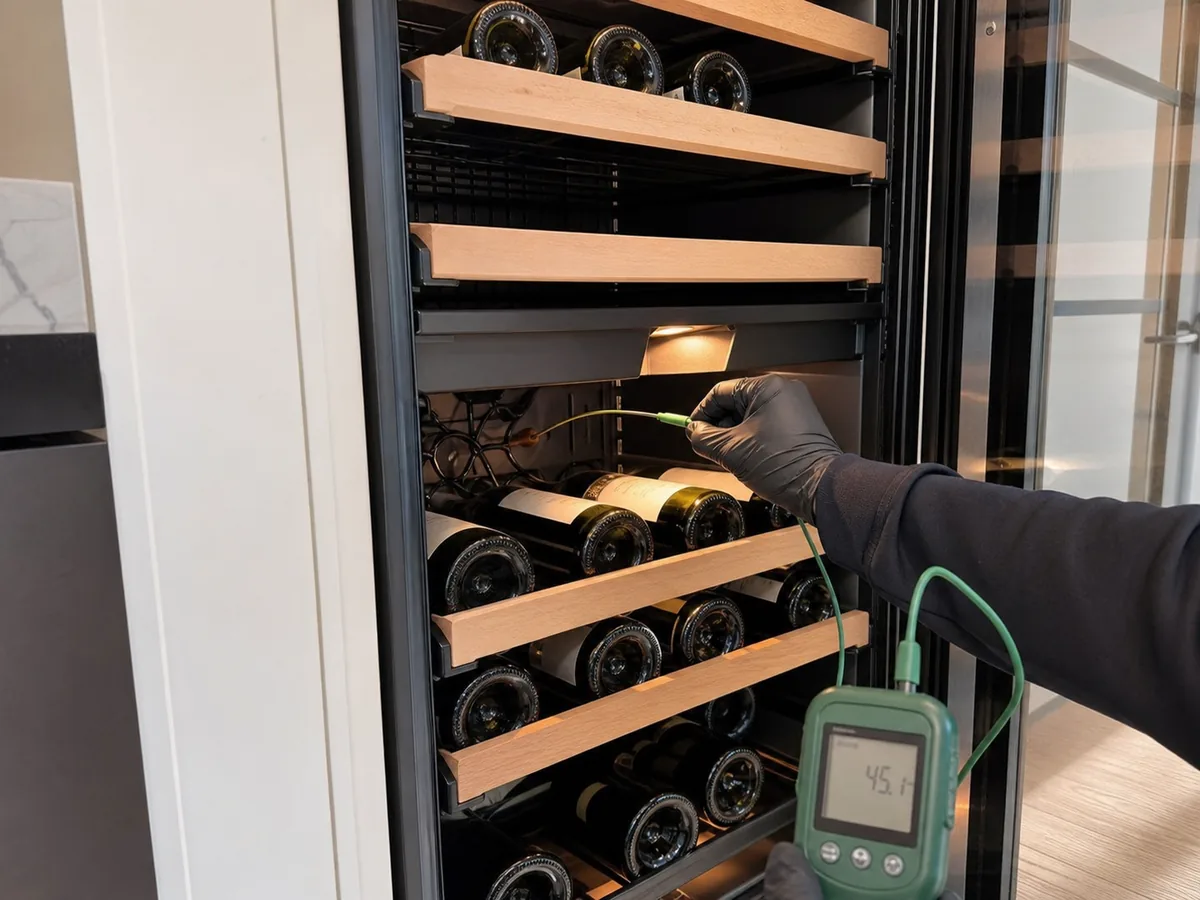
Livermore is one of California's oldest wine regions — the Livermore Valley AVA has been growing fruit since the 1880s, and plenty of homes here keep a serious cellar to match. When you live ten minutes from Wente and Concannon, the wine-storage unit in your kitchen isn't a novelty. It's protecting bottles you actually care about.
That raises the stakes on a Sub-Zero wine fridge, because the failures that would be a shrug in a beverage cooler are a real problem when there's good Livermore Valley fruit behind the glass.
Why local heat makes a wine unit work harder
A wine fridge holds a tighter, warmer target than a refrigerator — typically the mid-50s for long-term storage — and it has to hold it steadily. In Livermore's hot, dry summers, the same inland heat that stresses a refrigerator pushes a wine unit too, and a struggling unit shows up as temperature swings rather than an outright failure.
Those swings are the enemy of a cellar. Bottles that ride up and down a few degrees with every afternoon heat wave age unevenly, and a unit that can't hold its setpoint through a Livermore August is telling you the sealed system or the door seal needs attention.
The two faults we see most
First, dual-zone drift. Many Sub-Zero wine units run two zones at different temperatures; when the divider damper or a zone sensor drifts, one shelf holds while the other creeps warm, and you won't notice until a favorite bottle tastes cooked. Second, humidity and seal problems. Wine units are built to hold humidity so corks don't dry out, and a tired gasket in a dry Livermore home lets that humidity escape — corks shrink, seals fail, and air gets to the wine.
Worth fixing, almost always
The good news is that wine-unit repairs are usually bounded and worth doing. A sensor, a damper, a fan, or a gasket is a defined part on a unit built to run for years. We diagnose against the actual readings — zone temperatures, humidity, door seal — so you're not replacing a compressor when a $200 sensor was the whole story. With a collection that reflects the valley you live in, that precision matters.
FAQ
Questions & answers
What temperature should my Sub-Zero wine fridge hold?
Long-term storage usually sits in the mid-50s°F, with serving zones cooler. The exact target depends on your wine, but the key is that the unit holds it steadily without swinging during Livermore's hot afternoons.
One zone is warmer than the other — is that serious?
On a dual-zone unit a small difference is by design, but a zone that keeps drifting warm points to a sensor or damper fault. It's worth diagnosing before bottles in that zone are affected.
Rather leave it to a specialist?
Tell us the model and the symptom and you will get a clear price before any work begins.